The Benefits of Virtual Tours for Real Estate

Eddie Kingsnorth ·June 5, 2026 · 8 minutes
A virtual tour lets someone move through a space at their own pace, from anywhere, before it is built or before they can visit in person. For a property still under construction, or a buyer who lives in another city, that is often the difference between passing interest and a real decision.
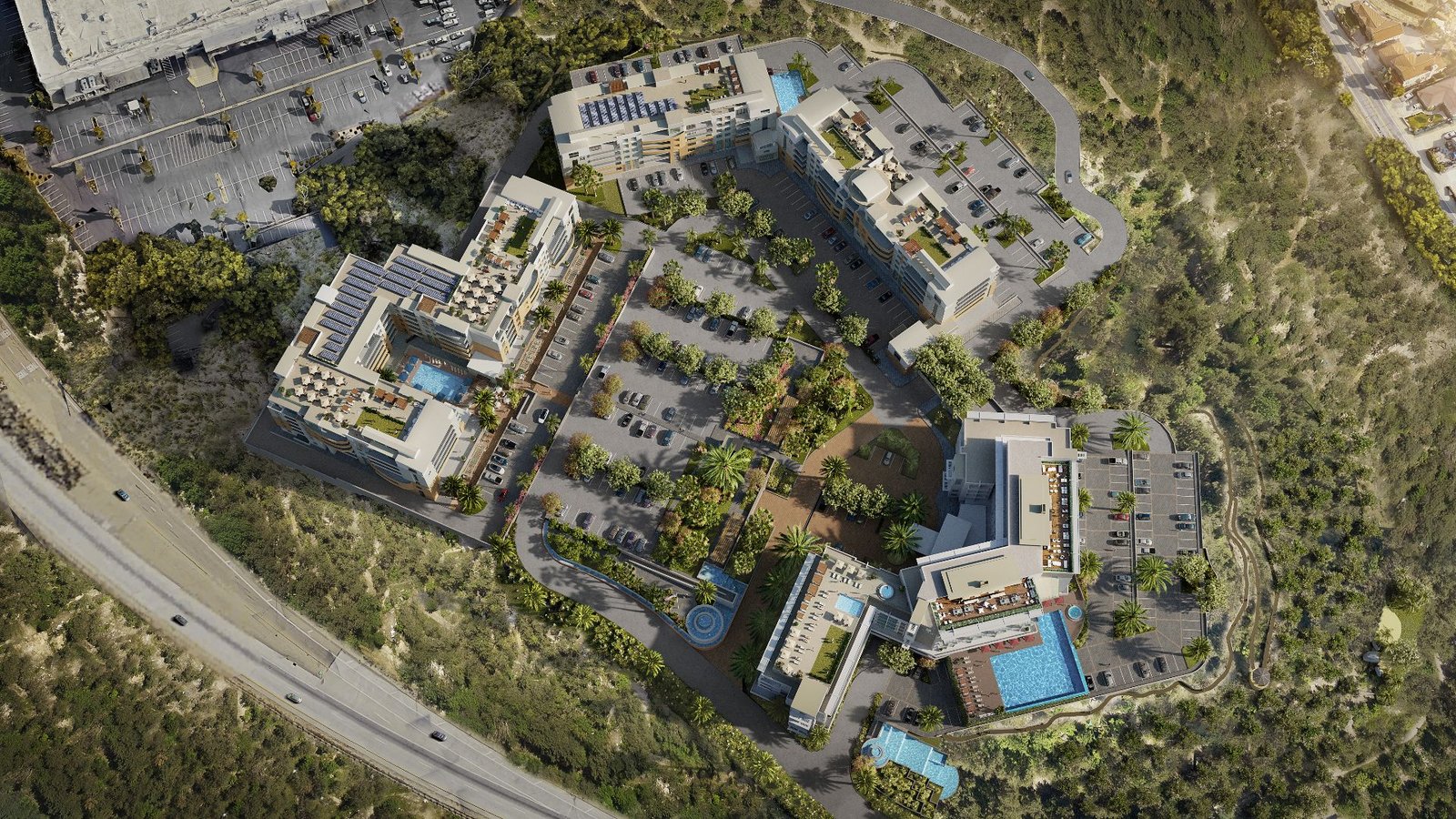
The tours we build are not 360 photographs of a finished room. They are navigable experiences built from the same 3D model as your renderings, so a buyer can explore a space that does not physically exist yet, and everything they see stays accurate to the actual design.
What a Virtual Tour Actually Is
There are two very different things sold under the same name. One is a 360 photo tour stitched from images of a finished, furnished room. The other, the kind we produce, is a navigable 3D experience generated from the model of your project. Because it is built in real 3D, it can show a building that has not been constructed, and it can be revised, re-angled, and extended the way a photo tour never can.
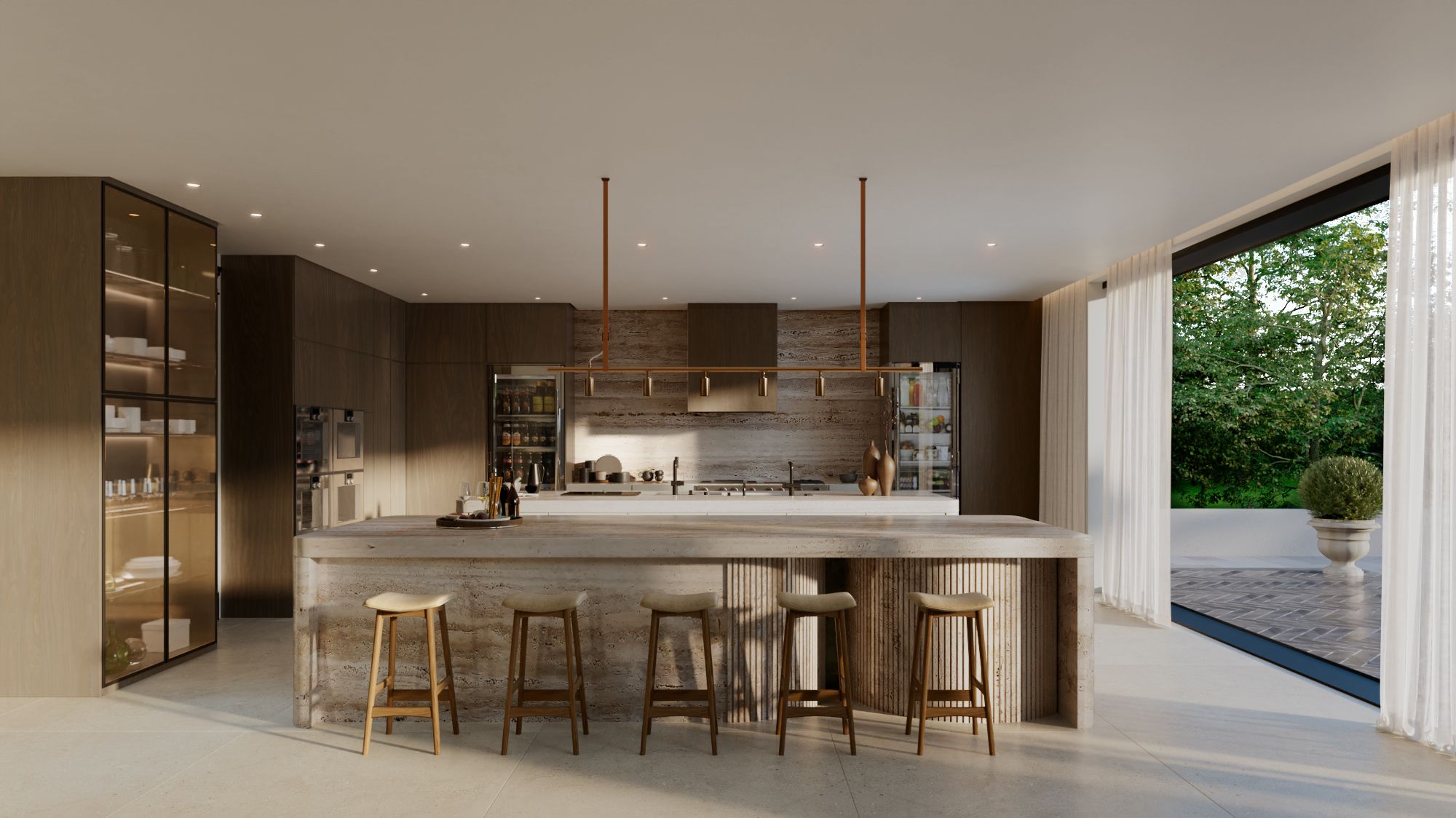
It is also not virtual staging. We do not drop furniture onto a photograph. When a space needs to be shown furnished, we model and light it properly within the scene, so it reads correctly from every position a viewer can move to.
Built From the Same Model as Your Renderings
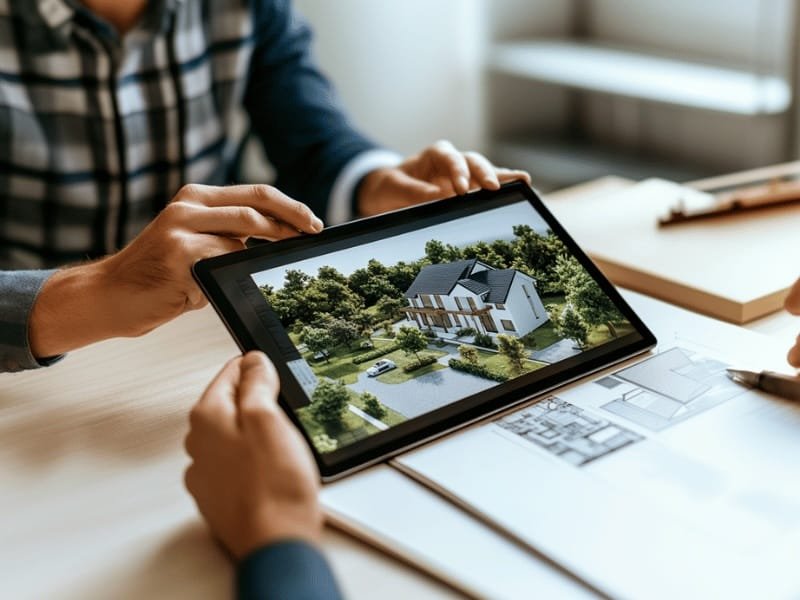
The single most important thing to understand about our tours is where they come from. The same 3D model that produces your still renderings and your animation also drives the tour. Nothing is approximated or invented for it.
That has two practical effects. The tour is accurate to the real design, the proportions, materials, sightlines, and views a buyer experiences are the ones that will actually be built. And it is efficient, because the heavy work of building and lighting the model is already done for the rest of your visual set. A project can extend from stills into animation and into a tour without starting over.
Where Virtual Tours Earn Their Place
A tour is not the right tool for every project, but in a few situations it does work that stills and animation cannot.
Remote and international buyers. When a buyer cannot stand in the space, a tour lets them understand scale, flow, and the view from a specific window without getting on a plane. For off-plan purchases, this is often what moves a hesitant buyer toward a reservation.
Pre-qualifying serious interest. A buyer who has explored a property in detail before an in-person visit arrives to confirm, not to discover. Sales teams spend their time on people who are already engaged.
Investor and planning presentations. A navigable model helps a committee or a board understand a project quickly, which supports funding conversations and approval reviews where a static image leaves questions open.
A larger unit mix. When a development has many layouts, a tour lets buyers compare and understand options at their own pace rather than through a stack of plans.
It Runs on a Phone, and It Lives on Your Site
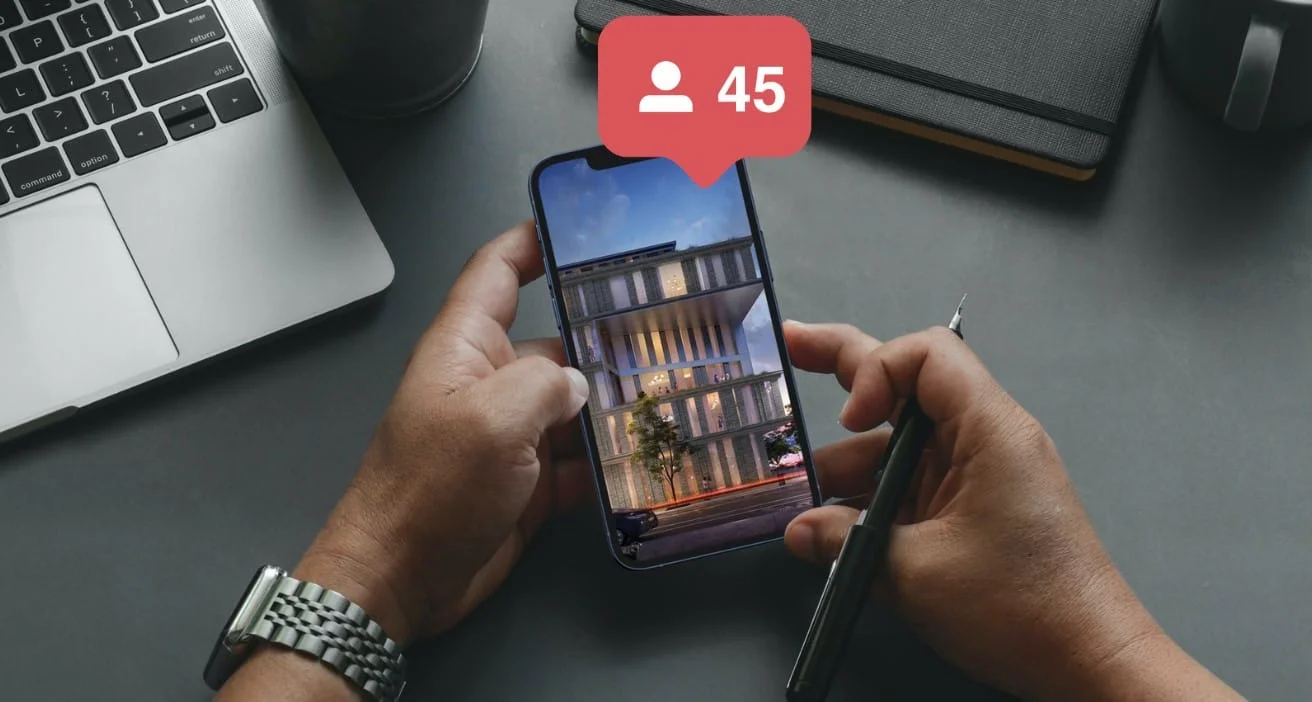
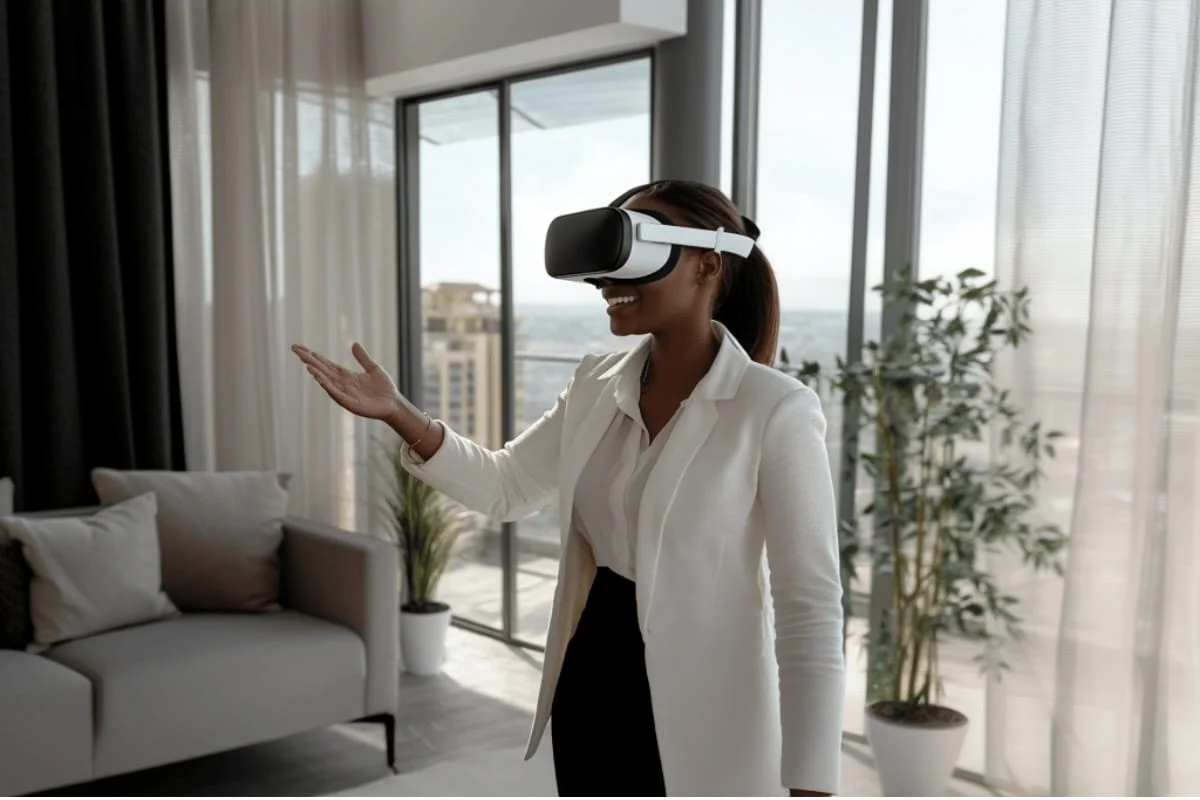
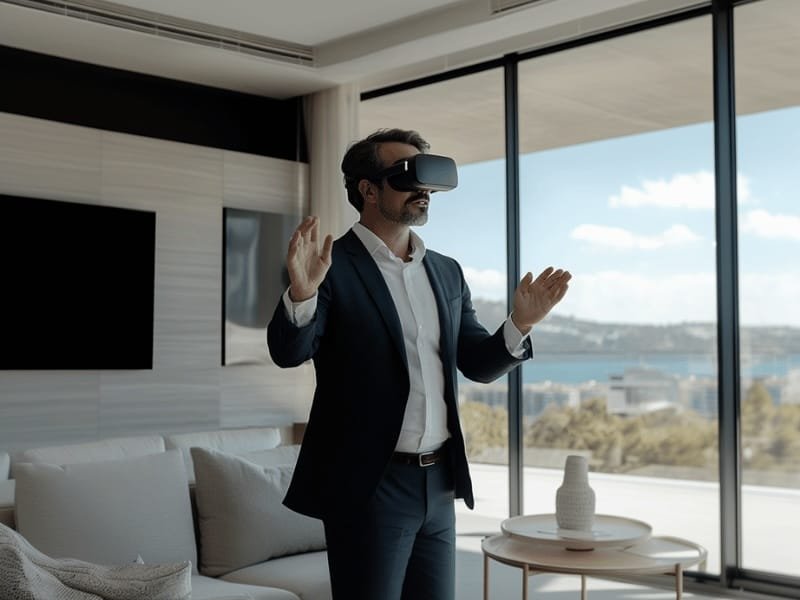
A tour is only useful if buyers can actually open it. Ours run on standard devices, including phones and laptops, with no headset required. A headset can deepen the experience at a sales centre or an event, but it is never a requirement to view the tour.
For hosting, we strongly advise running the tour on your own server or domain, so it sits inside your marketing rather than on a third-party platform you do not control. Interface and navigation are confirmed with you before final production, so how a buyer moves through the space is agreed before the expensive work is finished.
Switching Finishes Inside the Tour
Because the tour is built on accurate 3D of your actual design, finish and material options can be built into it. A buyer can move between flooring, cabinetry, or countertop selections and see the space respond.
The straightforward version is a set of pre-rendered variations of each space. A fully real-time configurator, where selections change on the fly, is a more advanced build we scope per project. Either way, the options shown are the real design, not a generic template.
When a Tour Is Worth It, and When It Is Not
We would rather tell you honestly than sell a tour into every project. For many launches, a strong set of stills and a short animation does the job, and a tour would add cost without adding much.
A tour earns its place when spatial understanding genuinely matters, when buyers are remote or buying off-plan, when there is a wide unit mix to compare, or when the sales process needs an always-available way to explore the property. The right answer depends on the project, the buyer, and the launch, which is exactly what we work out on the discovery call before recommending anything.
FAQs
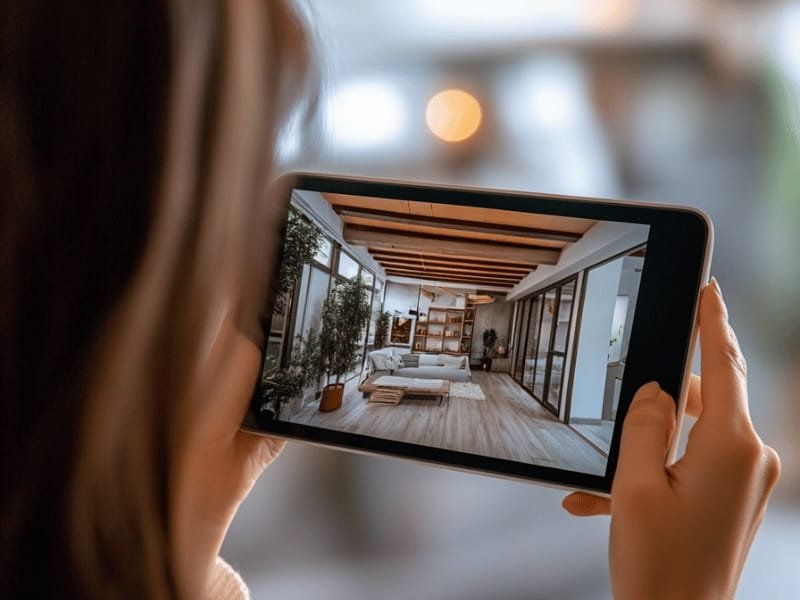
Do buyers need a VR headset? No. The tour runs on standard devices including phones and laptops. A headset is optional and most useful in a sales centre or at an event.
Is the tour built from photos or from the model? From the model. It is generated from the same 3D model as your renderings, so it is accurate to the actual design and can be produced before construction.
Is this the same as virtual staging? No. Virtual staging drops furniture onto a photograph. We build and light the space in real 3D, so it stays correct from every angle.
Where should the tour be hosted? We recommend your own server or domain, so it lives inside your marketing and you keep control of it.
Can buyers change finishes in the tour? Yes. We can build in finish and material options, from a set of pre-rendered variations to a fully real-time configurator scoped per project.
Does every project need a tour? No. For some launches stills and a short animation are enough. A tour adds the most for remote or off-plan buyers, larger unit mixes, and projects where understanding the space is the deciding factor.