
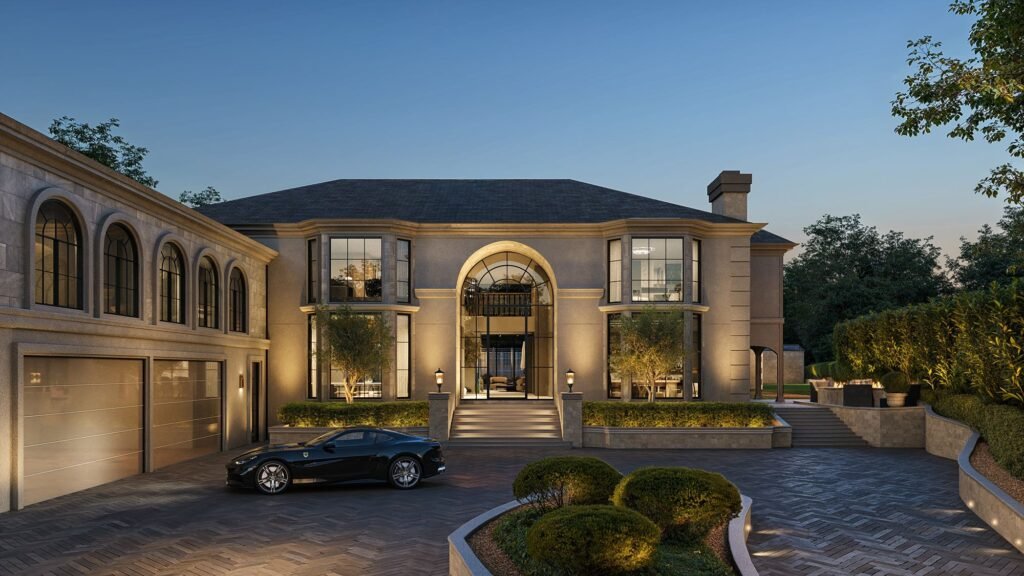
Case study
Chatsboro Drive
Project at a glance
Full design support and photorealistic renderings, from white-model studies to construction-ready visuals.
- Location
- Chatsboro Drive, Los Angeles
- Client
- Private homeowner
- Type
- Luxury single-family residence
- Scope
- Design support & renderings
01
Full Architectural Design Support and Photorealistic Home Renderings
A private homeowner on Chatsboro Drive in Los Angeles approached NoTriangle Studio with a strong emotional vision for her future home, but no fully defined design system to bring it together.
She did not just need renderings. She needed a visual strategy partner who could help her:
- Clarify her design direction
- Make confident decisions before construction
- Avoid costly mistakes during the build
- Ensure the finished home matched her intention
This project became a clear example of how photorealistic home renderings, when used strategically, function as a design decision and execution tool, not just a visual deliverable.
02
Project Description and Goal
Turning inspiration into a build-ready design vision.
Sylvia knew how she wanted her home to feel, but the details were fragmented:
- Mixed reference images
- Incomplete plans
- Uncertain layouts and materials
The goal was not speed or marketing. The goal was clarity. Our role was to guide her through a visual decision-making process that would:
- Align architecture, interiors, and mood
- Resolve uncertainty before construction
- Give contractors precise, reliable references

03
Project Challenges
Challenge 1: No Clear Design Direction
The client's design preferences were broad and undefined. Our recommendation: start with visual structure, not aesthetics, organizing ideas into coherent, room-by-room direction before committing to detail.
Challenge 2: Fragmented Reference Materials
Dozens of images, screenshots, notes, and sketches made it difficult to see the full picture. Our recommendation: translate inspiration into clear design logic using curated visual boards and controlled iterations.
Challenge 3: The Need for Guided Options
Layouts, ceiling heights, cabinetry, and lighting all needed validation, but 2D plans were not enough. Our recommendation: use white-model 3D exploration first, then move into photorealism only once spatial decisions were resolved.
Challenge 4: Changing Architectural Elements
Ceiling heights, wall positions, window designs, cabinetry, and baseboards all needed to be tested visually and refined in 3D.
Challenge 5: Mid-Render Adjustments
Even after the early design rounds, photorealistic renderings revealed opportunities to refine the look further. We adapted quickly to match her evolving taste and treated the final renderings as construction reference documents.

04
Project Solutions
Organizing References and Creating Room-by-Room Direction
We gathered every image, plan, and note the client shared and sorted them into clear themes. From there, we created detailed design boards for each major space. These boards helped Sylvia understand how materials, colors, lighting, and furniture would work together in the final home, and transformed abstract inspiration into actionable design clarity.
From White Models to Full Photorealistic Renderings
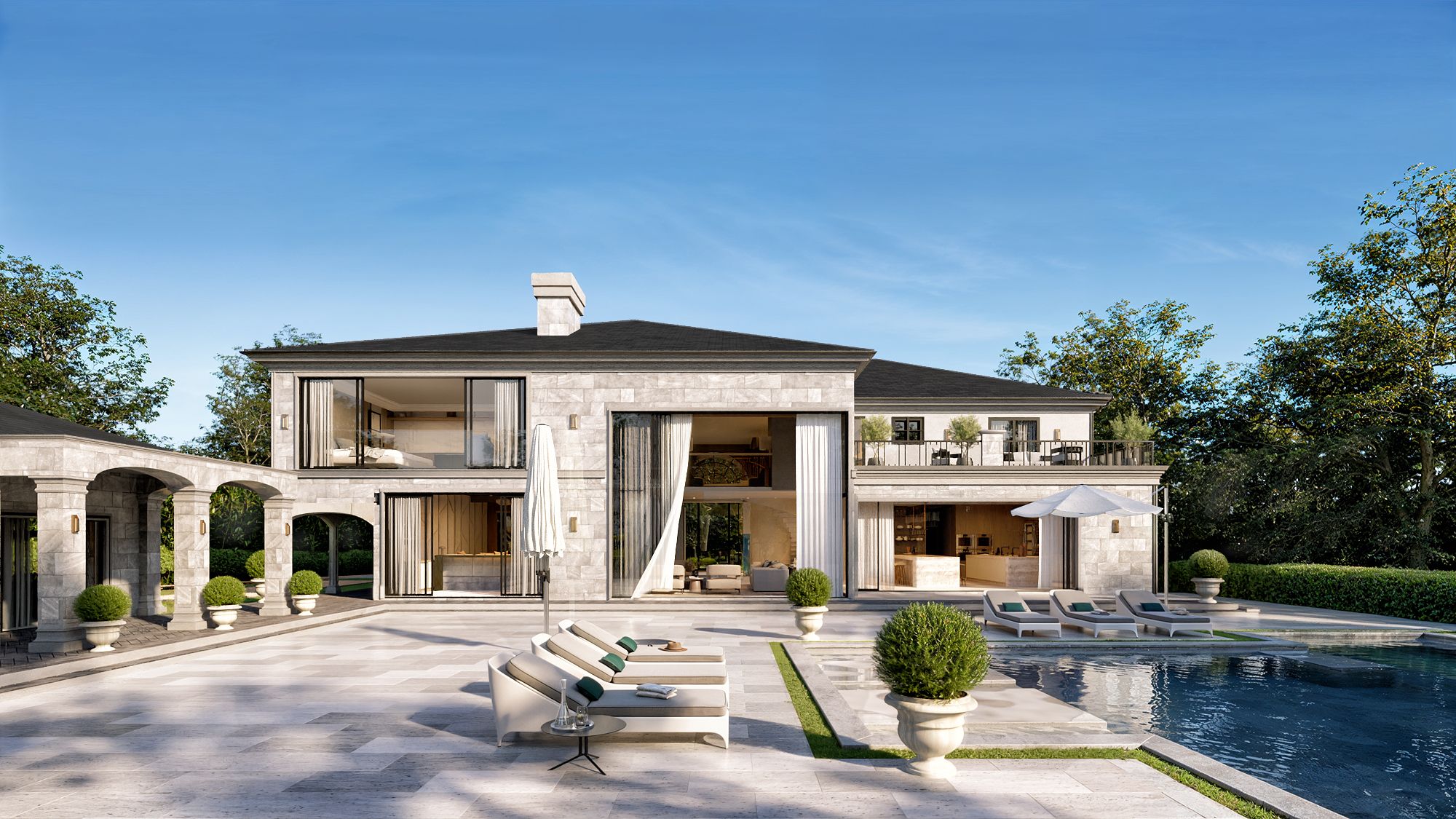
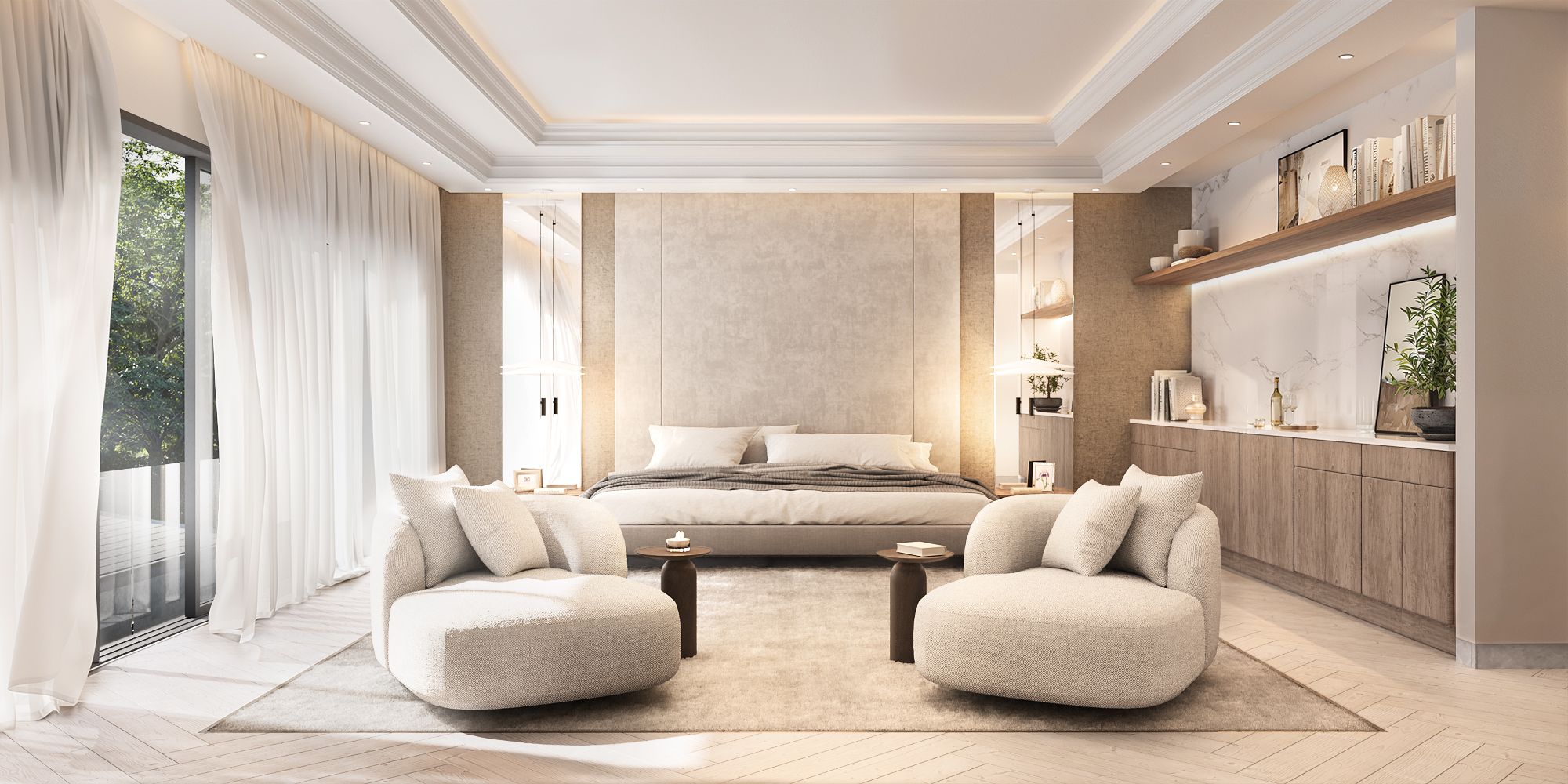
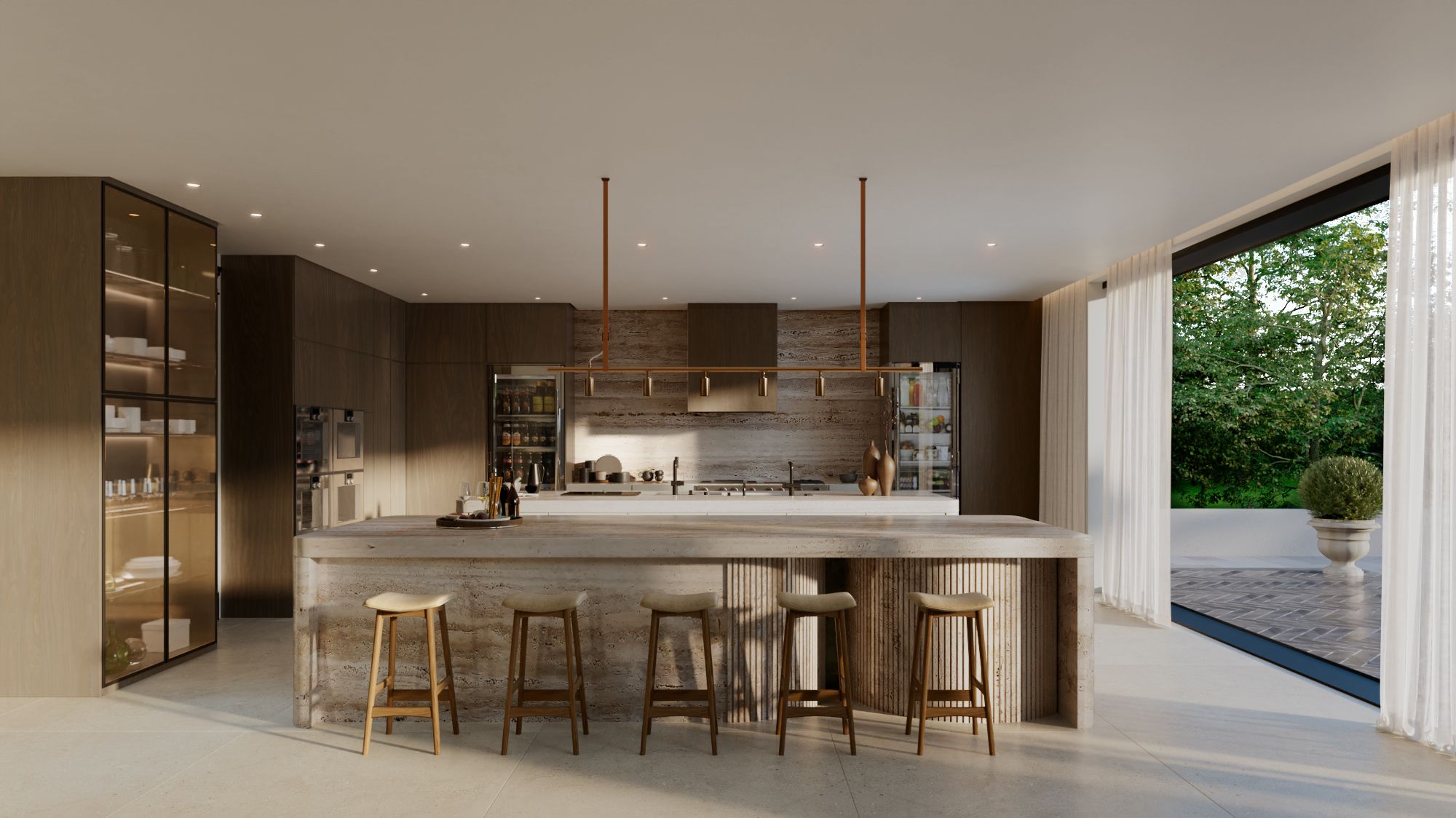
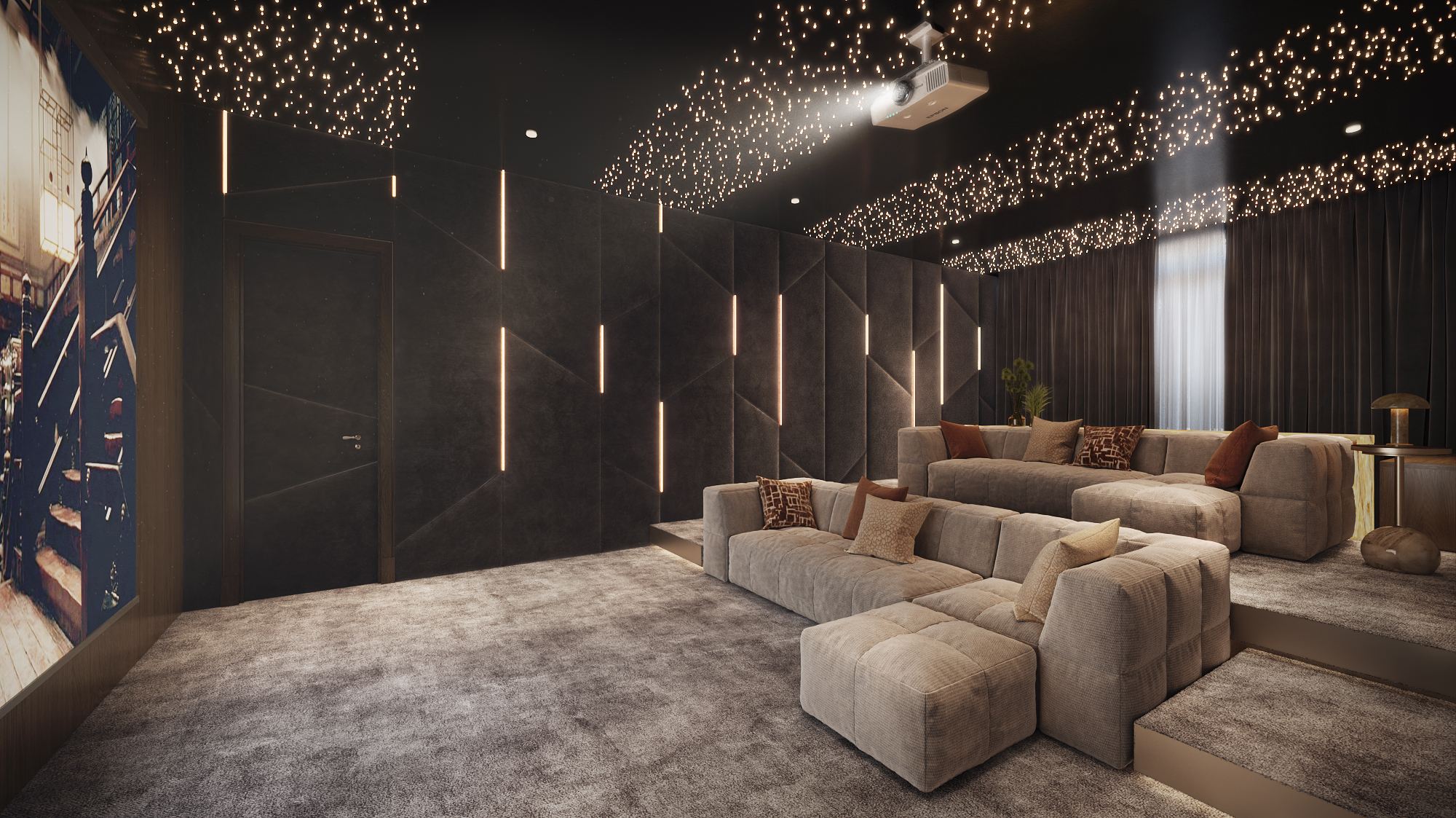
Once Sylvia approved the design direction, we developed full photorealistic interior and exterior renderings. This included detailed lighting, décor, materials, and exterior architectural finishes. Because photorealistic images reveal everything, they prompted additional refinements. We adjusted materials, finishes, proportions, and décor to match her exact vision. This stage is critical for avoiding late-stage changes that increase cost and stress.
White Model Stage: Iterative 3D Design Development
- Furniture layouts
- Wall positions
- Ceiling heights
- Window designs
- Built-in cabinetry
- Baseboards
- Overall spatial flow
Renderings Used for Construction Execution
- Realistic materials
- Lighting intensity and reflection behavior
- Precise proportions
- Shadow and surface detail
- True-to-life finishes
05
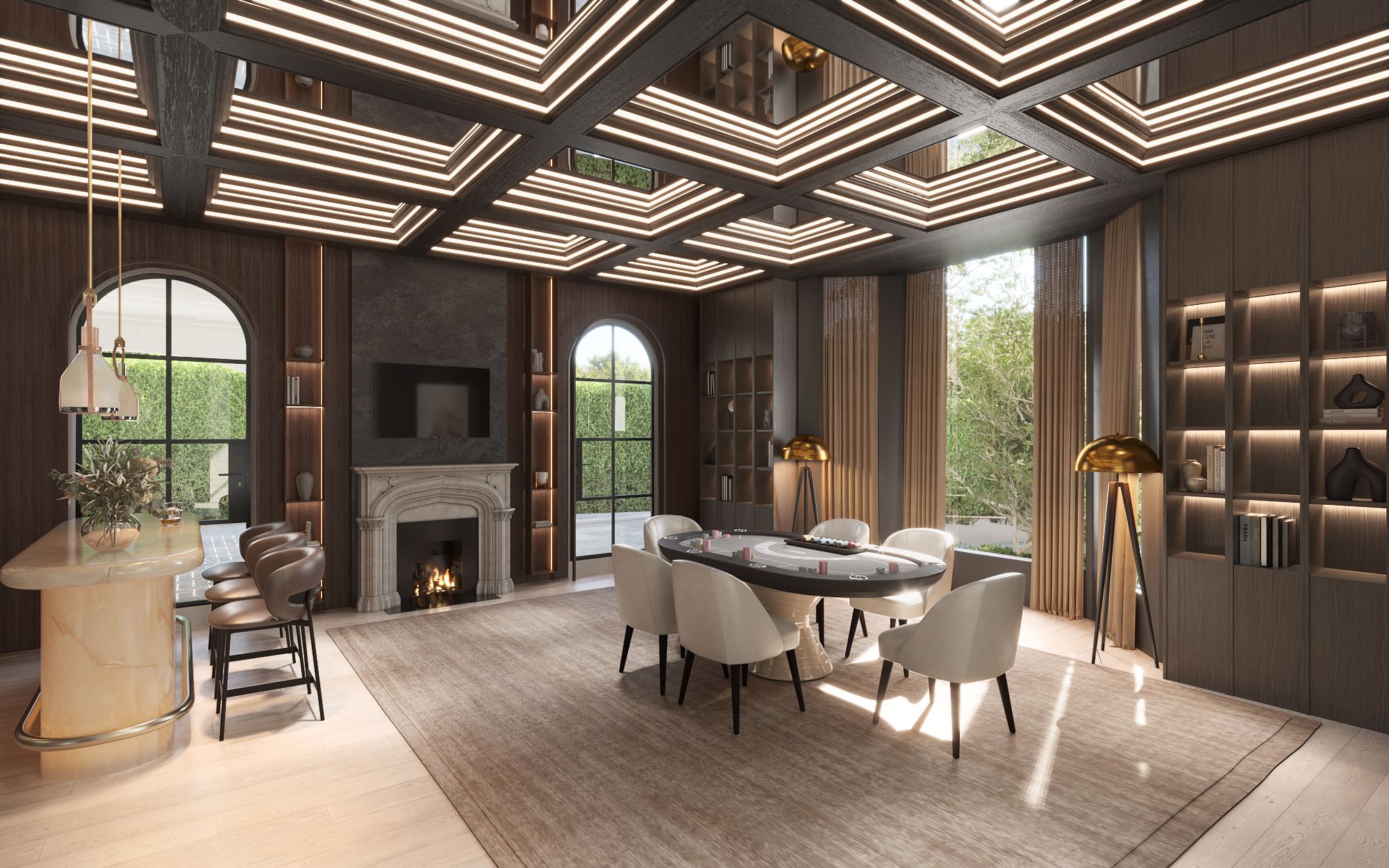
More Than a Rendering Studio, a Creative and Technical Partner
This project highlights what many clients discover when they work with us: we do not just render designs, we help shape them. Our work included:
- Architectural and interior design support
- Concept refinement
- Visualization-led decision-making
- Layout exploration
- Reference organization
- Contractor-ready visual documentation
For homeowners without a clear design, this combination is invaluable.
06
Results and Outcomes
Deliverables
- Room-by-room design boards
- Multiple white-model iterations
- Fully refined design concepts
- Photorealistic interior and exterior renderings
- Construction-ready documentation
Impact
- Faster, clearer design decisions
- A unified design direction across all rooms
- Fewer contractor miscommunications
- A final result aligned with the client's intention
- A highly satisfied homeowner
Start with a discovery call
Eddie Kingsnorth runs the first conversation. The call is where we understand the project and whether we're the right studio to do the work.