
Case study
LinkedIn Headquarters
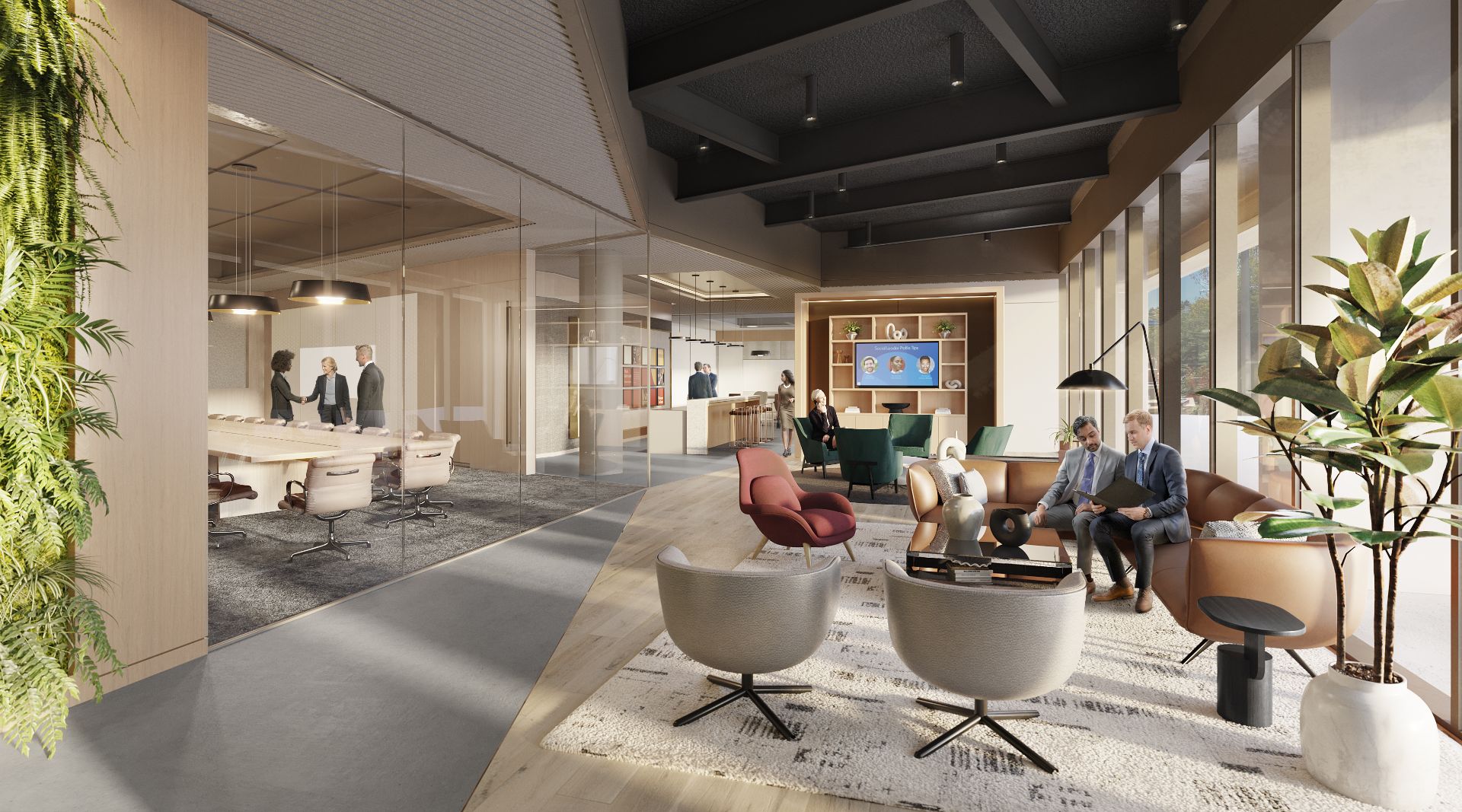
Workplace visualization for executive design alignment, developed with NBBJ to support stakeholder reviews and strategic decision-making.
Project at a glance
Workplace visualization for LinkedIn's new Palo Alto headquarters, developed with NBBJ not as a marketing exercise but as a live design tool, imagery that evolved in real time alongside the architecture and supported executive decision-making before construction.
- Client
- NBBJ
- End client
- Location
- Palo Alto, California
- Sector
- Workplace, corporate HQ
- Timeline
- Three-week window
- Scope
- Workplace visualization suite
01
Project Context
When NBBJ commissioned NoTriangle Studio to visualize LinkedIn's new Palo Alto headquarters, the objective was not simply to illustrate an architectural proposal. The visuals needed to communicate a broader shift: how a global technology brand was redefining the workplace in a post-pandemic world.
The project sat at the intersection of design development and executive decision-making. The imagery would be used to support internal reviews, stakeholder alignment, and strategic conversations around space, culture, and hybrid work.
This was not a marketing exercise. It was a live design tool.
02
The Challenge
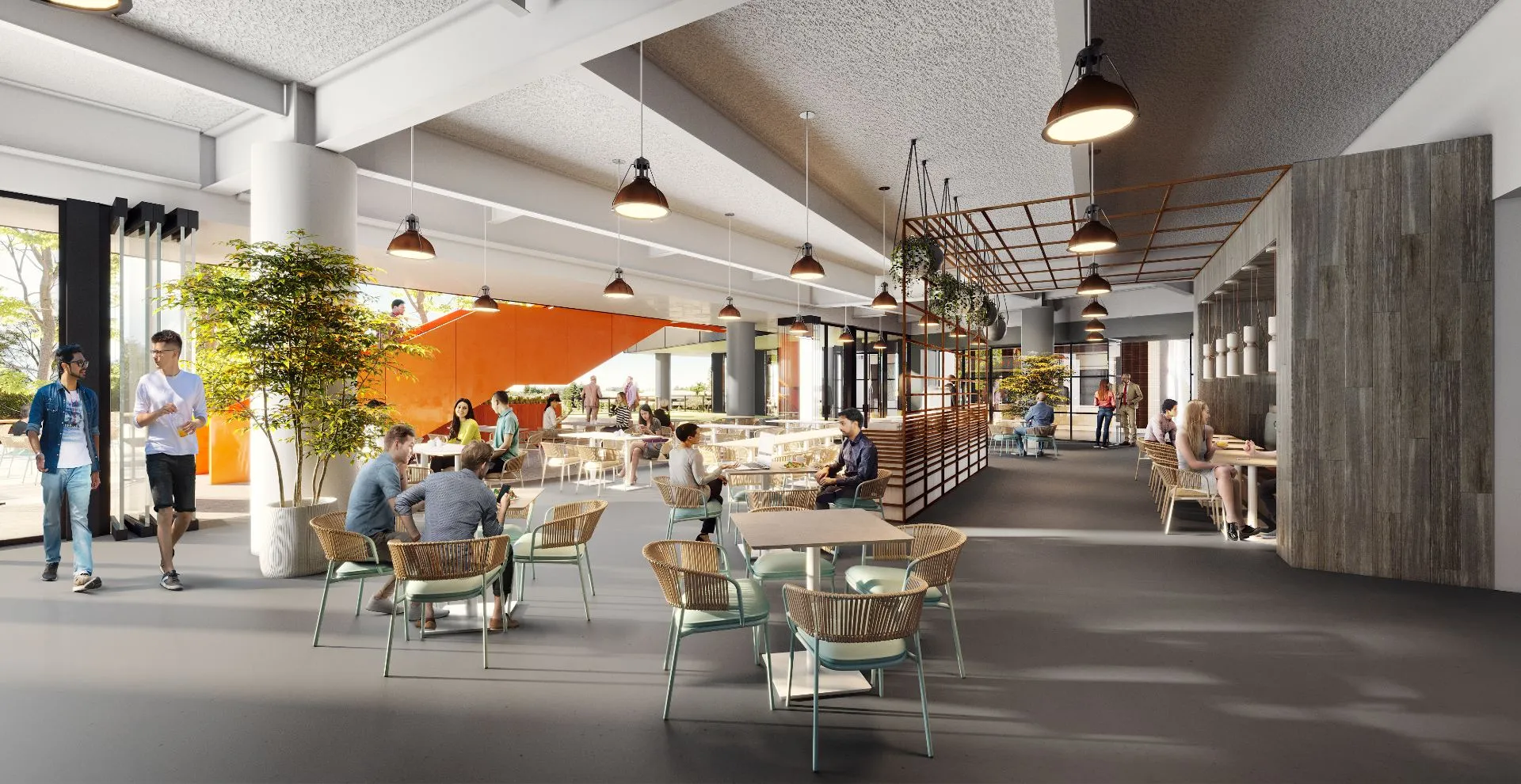
The timeline was compressed. The documentation was evolving. The design intent was ambitious.
Within a three-week window, layouts, finishes, and workplace strategies were still being refined. NBBJ required visuals that could operate in parallel with the design process, not at the end of it.
The core challenge was to translate incomplete and shifting information into imagery that:
- Reflected the latest design decisions
- Maintained architectural accuracy
- Conveyed how the space would actually feel to use
- Could support executive-level discussions before construction
03
Our Approach
We began with rapid onboarding and data verification, consolidating multiple inputs, including concept packages, adjacency diagrams, workplace strategy documents, and reference material, into a coherent spatial framework.
Rather than treating the project as a static rendering task, we structured it as a design communication workflow:
1. White-Model Phase
We rebuilt the headquarters in 3D and developed white-model views to test:
- Spatial composition
- Light flow
- Human scale
- Key sightlines
These studies allowed NBBJ and LinkedIn to evaluate proportions, circulation, and hierarchy before committing to detailed finishes.
2. Composition & Camera Strategy
Camera angles were selected based on how executives would interpret the space, not on architectural symmetry.
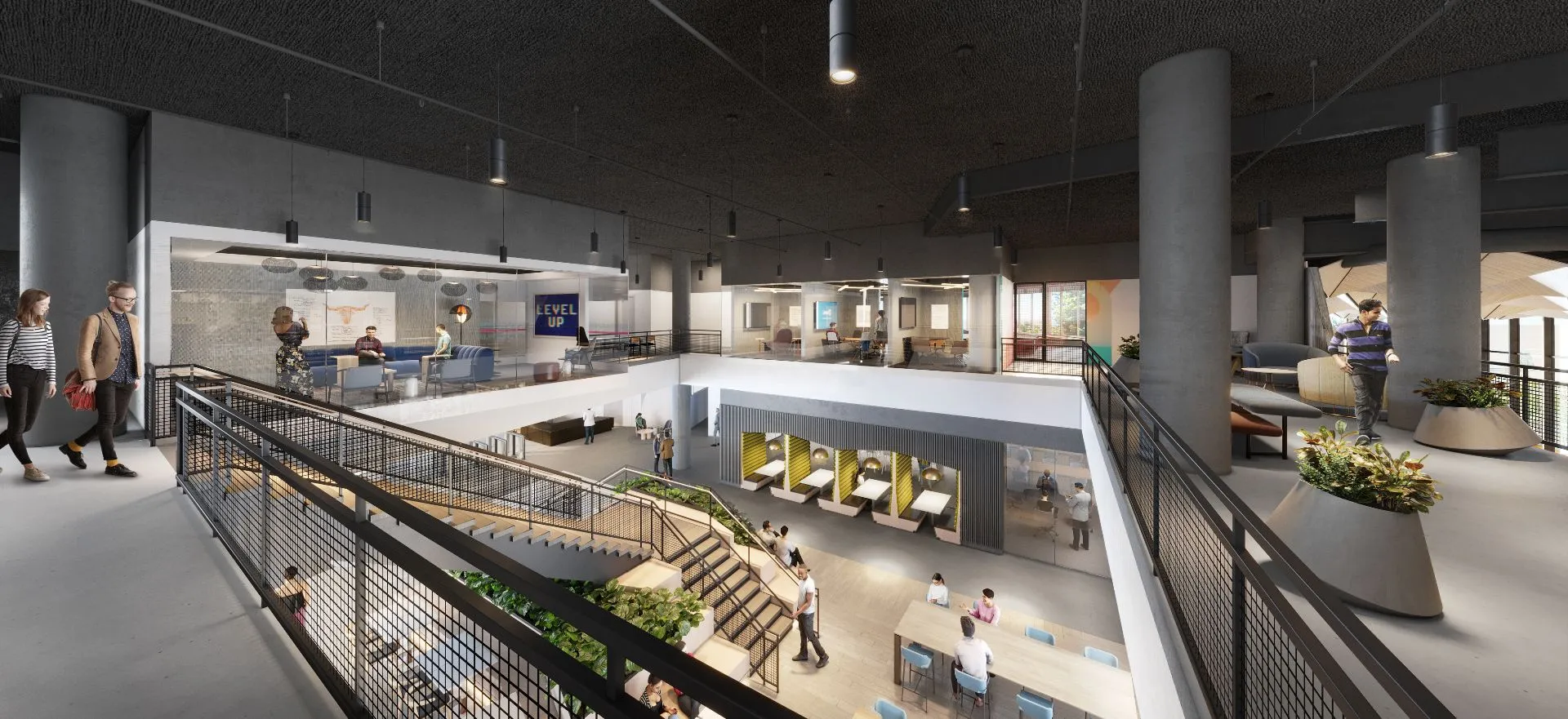
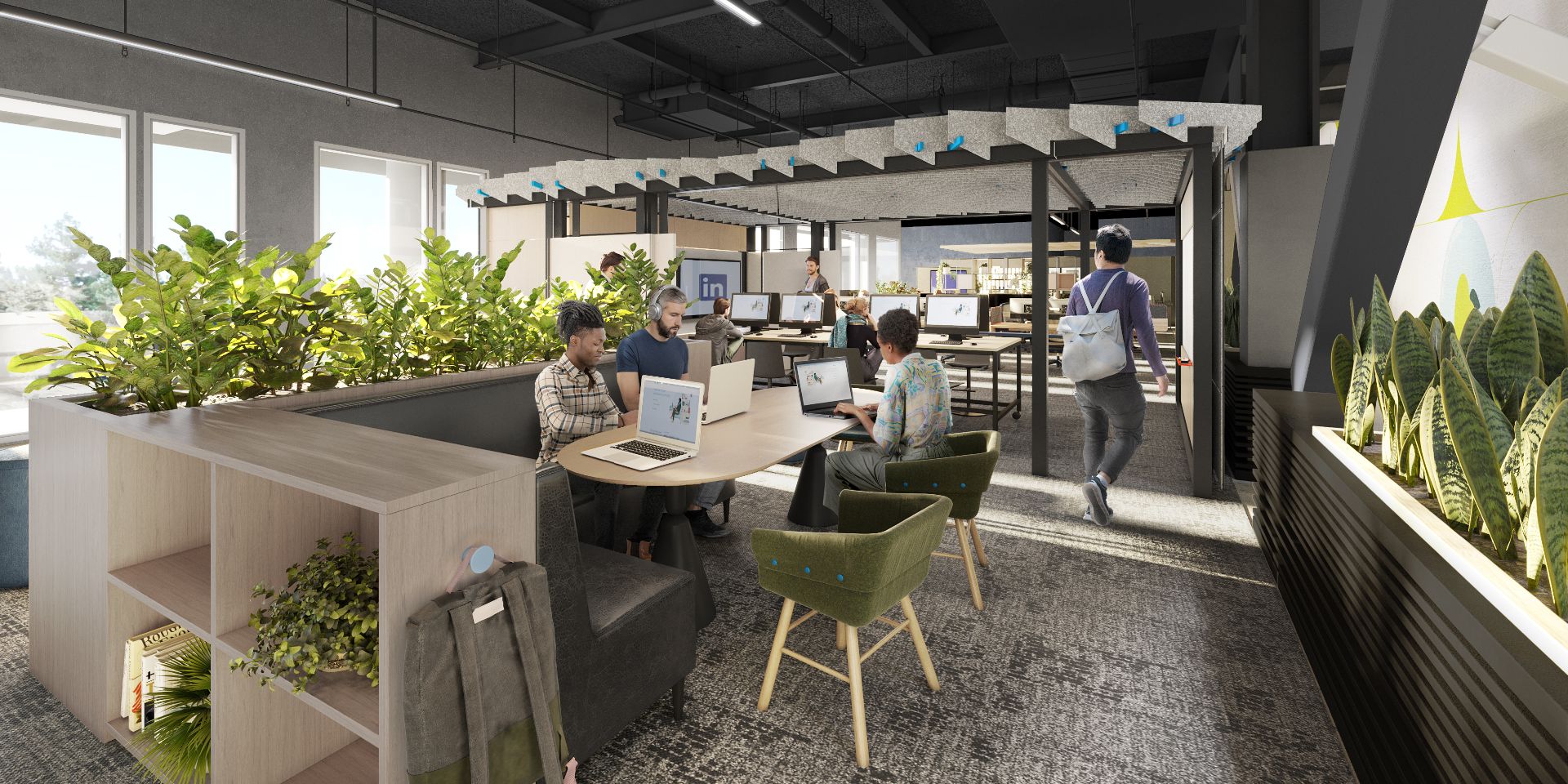
Each view was designed to place the viewer inside the environment, revealing:
- Open neighbourhoods
- Focus zones
- Informal collaboration areas
- Hospitality-inspired social hubs
The goal was to show how people move, work, and interact, not just how the building looks.
3. Full-Color Development
As the design evolved, we transitioned into full-color rendering, adapting continuously to:
- Updated floor layouts
- Revised furniture systems
- Changing material palettes
- Acoustic and lighting adjustments
The visuals functioned as a live representation of the project, evolving in real time alongside the architecture.
04
Lighting, Mood, and Human Presence
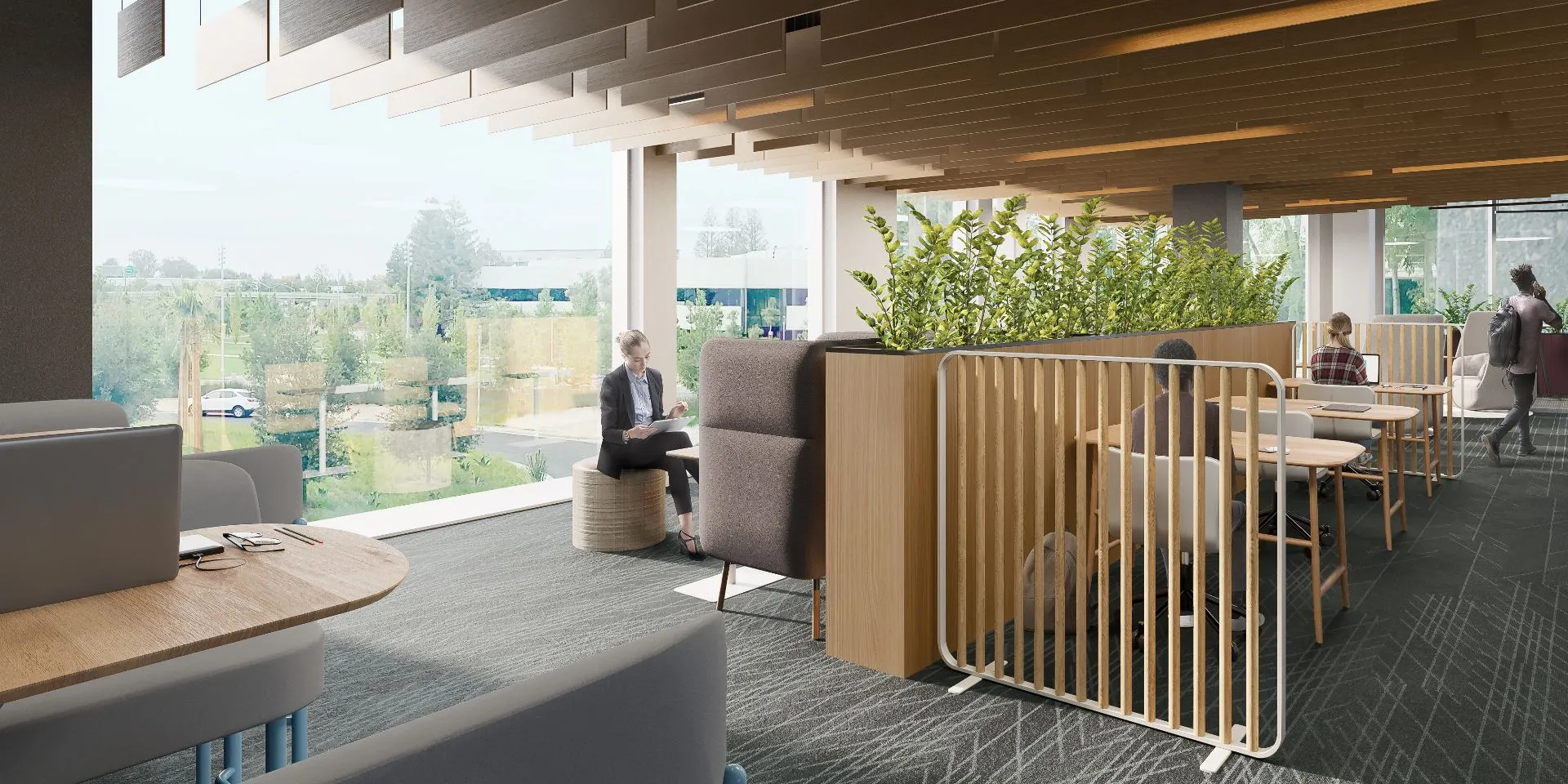
A key requirement was to balance realism with atmosphere. We developed a lighting setup that combined:
- Natural California daylight
- Warm interior illumination
- Subtle ambient contrast
This created a visual language that felt optimistic, grounded, and human, aligned with LinkedIn's brand values.
People were introduced not as decoration, but as narrative elements: diverse, naturalistic figures engaged in real work scenarios. The result was imagery that communicated culture and usability, not just spatial aesthetics.
05
Outcome
The final visual suite became a core communication asset for both NBBJ and LinkedIn. The imagery was used to:
- Support executive design reviews
- Resolve spatial and functional questions
- Align stakeholders around a shared vision
- Communicate the workplace concept internally before construction
The visuals enabled decision-making under uncertainty, allowing complex architectural ideas to be evaluated, discussed, and approved with clarity.
06
Why This Project Matters
This project shows how visualization can function as part of the design process itself, not just a final deliverable. By turning evolving, incomplete documentation into clear, human-centred imagery, the work helped a global brand and its architects make confident decisions about space, culture, and hybrid work before a single wall was built.
Start with a discovery call
Eddie Kingsnorth runs the first conversation. The call is where we understand the project and whether we're the right studio to do the work.