
Case study
Teatro Angelina
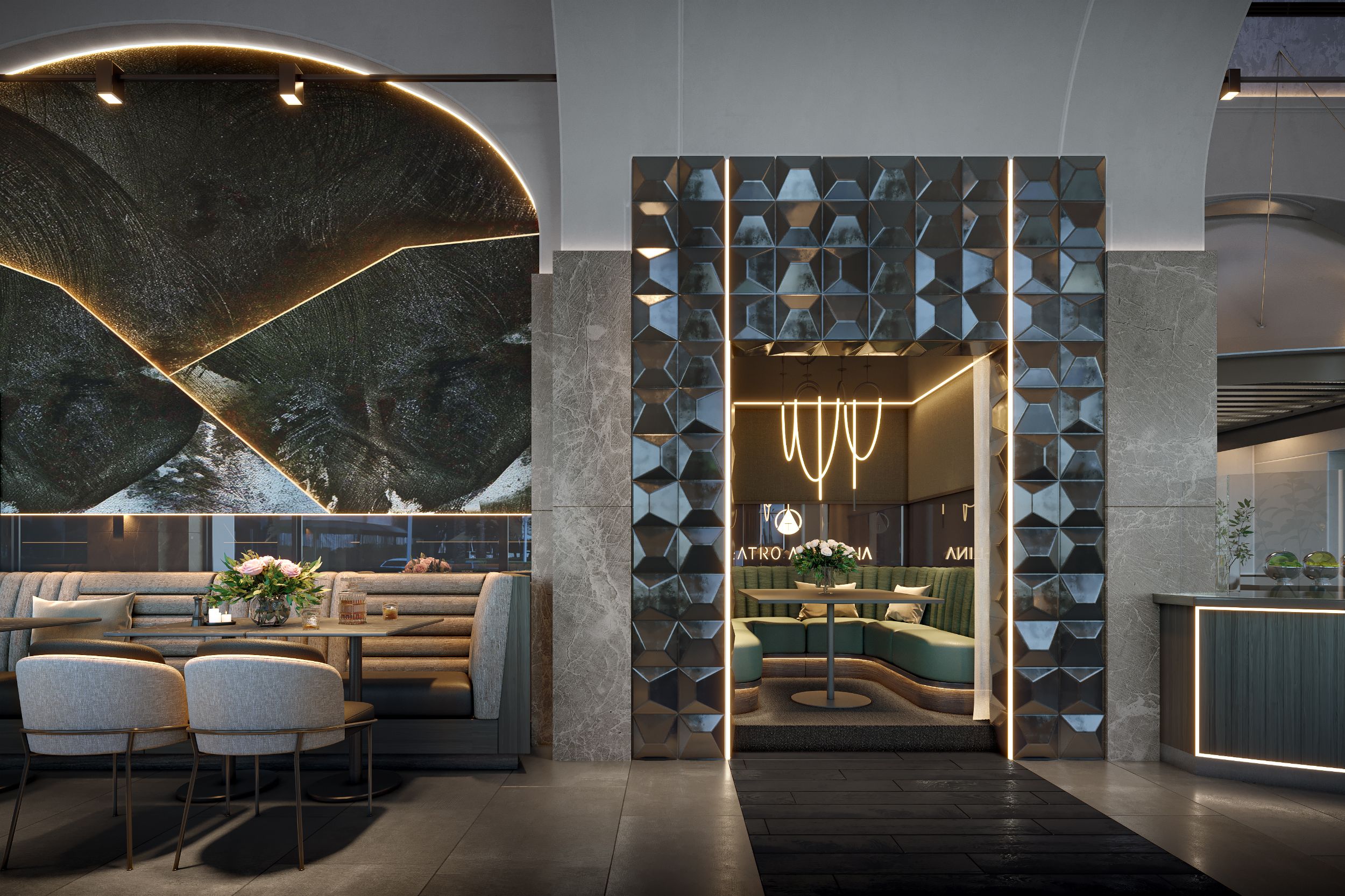
Photorealistic interior visualization for a destination restaurant, supporting lighting design, material approvals, and confident client sign-off.
Project at a glance
Located beside the Orange County Performing Arts Center, Teatro Angelina was conceived as more than a restaurant, a pre-show destination and post-performance lounge where lighting performs as architecture. Visualization was the tool that got the design understood, approved, and built.
- Client
- VANROOY Design
- Location
- Orange County, California
- Project type
- Tenant improvement
- Scope
- Three photorealistic interior renderings
- Project size
- 4,800 sq. ft.
- Program
- 151 seats, 52 tables
- Recognition
- 37th Annual Calibre Design Awards
01
Project Context
Located beside the Orange County Performing Arts Center, Teatro Angelina was conceived as more than a restaurant. It needed to function as a pre-show destination and a post-performance lounge, a space where atmosphere could shift throughout the evening without losing coherence or intent.
For VANROOY Design, lighting was not a finishing touch. It was a core architectural driver, shaping perception, pacing, comfort, and commercial performance. Before construction could move forward, the design needed to be fully understood, approved, and emotionally legible to stakeholders.
This is where visualization mattered, not as decoration, but as a decision-making tool.
02
The Challenge
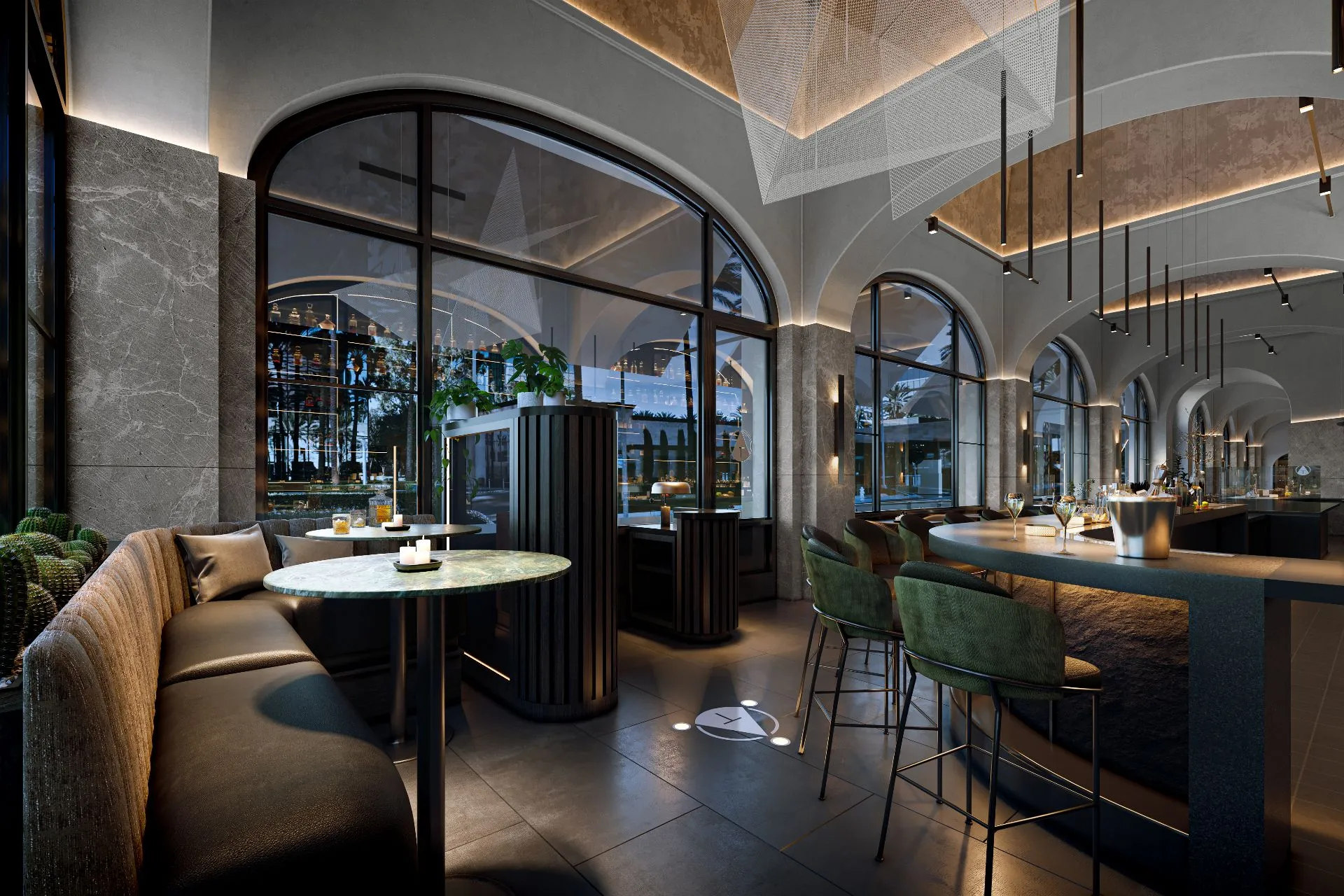
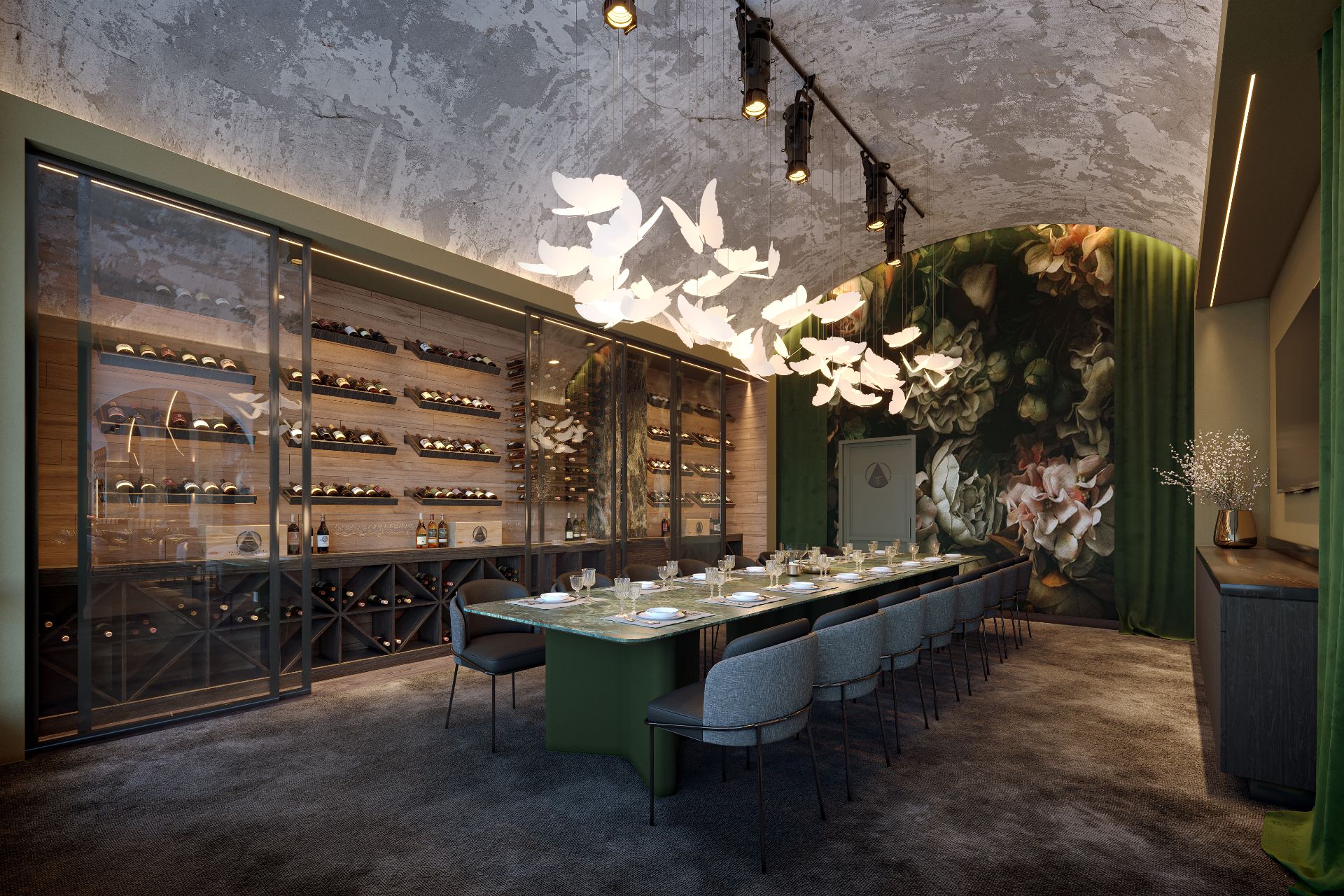
The interior design relied on nuance rather than spectacle: layered blacks, old-world plasters, marble-wrapped columns, velvet textures, controlled reflections, and a tightly calibrated lighting strategy.
Small misinterpretations, a material reading flat, a light source feeling harsh, a reflection breaking the mood, could undermine the entire experience.
The visuals needed to do three things at once:
- Accurately represent materials, finishes, and lighting behavior
- Capture the emotional tone of the space: intimate, theatrical, composed
- Support confident client approvals before execution began
Generic renderings would not be sufficient.
03
Strategic Creative Approach
We began the project the same way we do all premium interior work: by defining atmosphere before imagery.
Through a focused art-direction phase and curated moodboards, we aligned with VANROOY on the intended emotional register, a contemporary interpretation of Art Deco, with subtle 1980s references, expressed through texture, contrast, and light rather than ornament.
Once direction was set, execution became technical and precise. Particular attention was paid to:
- Material accuracy, ensuring plasters, marbles, metals, and fabrics behaved correctly under warm lighting
- Lighting behavior, modeling illumination as it would exist in reality, not as a graphic overlay
- Photorealism with restraint, images designed to feel observed, not staged
The scope was intentionally limited: three carefully crafted images, each designed to carry weight.
04
The Role of Visualization
The renderings were used to:
- Finalize lighting intent and fixture placement
- Validate material selections and finishes
- Communicate the atmosphere clearly to the ownership before construction
- Support confident approval and execution
Rather than showing everything, the images focused on moments, where light, material, and space converged to express the project's identity.
05
Outcome
The project moved forward with clarity and alignment.
Teatro Angelina opened as a space where lighting performs as architecture, guiding movement, shaping mood, and supporting the rhythm of service throughout the evening.
The work was later recognized at the 37th Annual Calibre Design Awards, honoring excellence in commercial interior design across Southern California.
While awards were never the objective, the recognition reflected something important: the design, and its visual communication, resonated beyond the immediate client team.
06
Why This Project Matters
Teatro Angelina reflects the type of work we are most often brought into:
- Design-led environments where nuance matters
- Projects where approvals depend on trust and clarity
- Teams who use visualization to make informed decisions, not just to market
It is a reminder that when visuals are treated as part of the design process, not an afterthought, they help projects move forward with confidence.
Start with a discovery call
Eddie Kingsnorth runs the first conversation. The call is where we understand the project and whether we're the right studio to do the work.